
How to Mix Cushions and Wallpaper: A Guide to Pattern Layering in Luxury Interiors
For years, people were taught that interiors should match.
Curtains matching cushions. Cushions matching wallpaper. Every element carefully coordinated to avoid the risk of “clashing.” But the most memorable interiors rarely feel perfectly matched. Instead, they feel layered, collected and deeply personal.
In 2026, luxury interiors are moving decisively away from safe minimalism and towards spaces with narrative, texture and individuality. Pattern layering has become one of the defining characteristics of this shift, particularly within nature-inspired interiors where wallpaper, textiles and decorative pieces work together to create atmosphere rather than simply decoration.
The good news is that learning how to mix cushions and wallpaper is far less complicated than many homeowners assume. The secret is not matching everything perfectly. It is understanding balance, scale and rhythm.
Once those principles are understood, pattern mixing becomes less intimidating and far more creative.
Whether you are styling a bold living room, updating a bedroom or designing a layered home office, this guide will help you confidently combine wallpaper and textiles in a way that feels luxurious, cohesive and intentional.
Quick Tips for Mixing Cushions with Bold Wallpaper
If you are styling bold wallpaper for the first time, these principles instantly make pattern layering feel more manageable:
Choose one dominant “hero” pattern
Vary pattern scale between wallpaper and cushions
Keep a cohesive colour palette throughout the room
Mix textures alongside prints for depth
Allow one element to visually lead the space
Use patterned cushions to soften rather than compete
Introduce plains or tonal fabrics between bolder prints
The goal is not perfect coordination. It is controlled contrast.
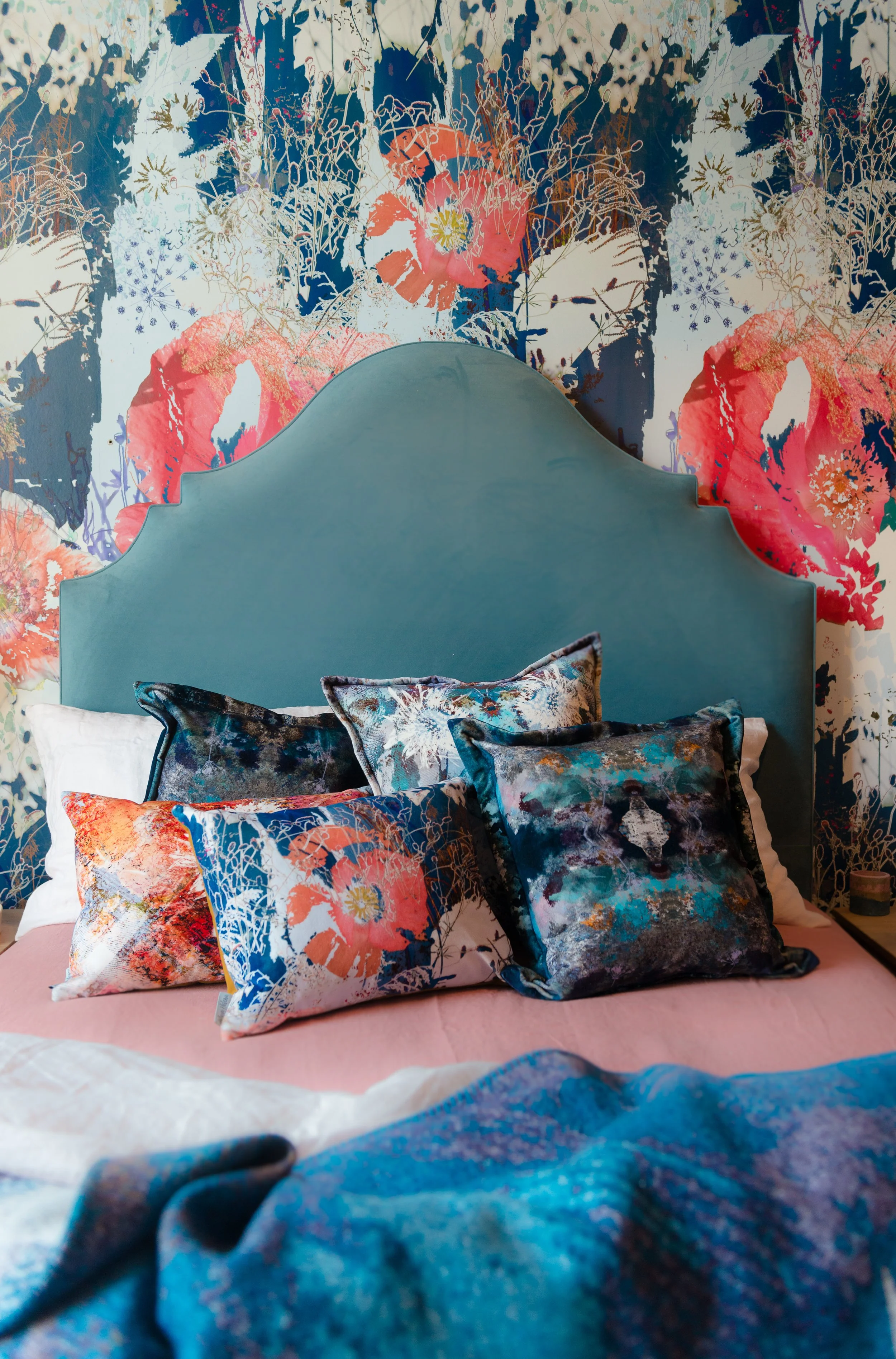
Nature-Led Layering
One reason Mairi Helena collections layer so naturally together is because they are all rooted in the same visual language.
Rather than designing patterns in isolation, the brand draws inspiration from Scottish landscapes, botanical forms, shifting light and photography-led composition. The result is a collection of designer textiles Scotland interiors can combine intuitively because they already share underlying tonal and atmospheric connections.
This is particularly important in pattern layering interior design. Rooms feel chaotic when patterns have no visual relationship to each other. But when colours, textures or themes subtly echo throughout a space, layering begins to feel curated rather than accidental.
Nature itself works this way. A landscape contains variation, contrast and complexity, but still feels cohesive because everything belongs to the same environment.
The best layered interiors borrow directly from that principle.
.
Mastering the Rule of Scale
One of the most common mistakes people make when mixing patterns is using prints of equal visual strength.
If both wallpaper and cushions compete at the same scale, the eye struggles to settle anywhere. Rooms begin to feel visually noisy rather than balanced.
This is why scale matters so much.
Typically, the wallpaper becomes the “hero” pattern within a room. Large-scale botanical wallpaper, oversized florals or statement murals establish the atmosphere and visual direction of the space.
Cushions should then complement this by introducing either:
Smaller-scale patterns
Simpler detailing
More tonal variations
Or textured plains that soften the overall scheme
For example, a large-scale dark botanical wallpaper pairs beautifully with cushions featuring finer botanical details, abstract textures or embroidered accents.
The contrast in scale creates hierarchy, which is essential in successful pattern layering interior design.
Finding the Common Thread in Colour
Colour is often what quietly holds layered interiors together.
The easiest way to successfully combine wallpaper and cushions is to pull colours directly from the wallpaper itself and repeat them subtly throughout the room.
A deep olive tone within wallpaper might reappear in velvet piping, a woven throw or a cushion trim. A softer neutral from the background of the print may become the dominant upholstery tone elsewhere in the room.
This creates visual continuity without forcing exact matching.
Mixing prints in living room schemes becomes significantly easier when colour palettes remain controlled. Even bold patterns feel sophisticated when united through tone.
This is also where colour drenching has become influential within luxury interiors. Rather than breaking spaces up with stark contrasts, designers are increasingly allowing colours to flow continuously across walls, upholstery and accessories to create immersive, atmospheric rooms.
Within layered interiors, cohesion matters more than symmetry.
Elevating a Room Through Texture
Pattern alone is not enough to create depth.
The most luxurious interiors combine texture just as thoughtfully as print. Velvet, linen, wool and silk all interact with light differently, helping prevent heavily patterned rooms from feeling flat or overwhelming.
Texture acts as a visual pause between patterns.
For example, pairing bold statement wallpaper with contemporary velvet cushions, UK designers are embracing adds softness and light variation that balances the stronger print behind it.
Velvet introduces richness and reflection. Linen softens formality. Wool adds grounding warmth. Together, these materials create the layered tactility associated with high-end interiors.
This is one reason luxury Scottish cushions have become increasingly popular within boutique hotels, curated homes and design-led interiors. They provide not only pattern and colour, but also physical atmosphere.
Rooms become more immersive when they invite touch as much as visual attention.
Integrating Heritage and Contemporary Design
One of the most interesting shifts within modern interiors is the blending of old and new.
Contemporary wallpaper is increasingly being paired with vintage furniture, inherited pieces and artisan-made textiles to create interiors that feel collected over time rather than purchased all at once.
This is where cushions become particularly powerful design tools.
A contemporary botanical print cushion can modernise a traditional armchair. A velvet bolster can soften a minimalist sofa. Patterned textiles help bridge eras and create continuity between architectural styles.
Within artisan textile design, this layered approach feels especially relevant because it prioritises individuality over uniformity.
The goal is no longer perfection. It is personality.
This is also why bespoke Scottish homeware continues to resonate with homeowners seeking interiors that feel distinctive and emotionally connected to place.
Pattern Layering as Self-Expression
The best interiors rarely come from rigid rules alone.
Learning how to mix patterns in a room is ultimately about confidence. Understanding scale, colour and texture gives you the structure needed to experiment creatively without a space feeling chaotic.
Wallpaper and cushions should not simply coordinate. Together, they should tell a story about atmosphere, personality and how a room is meant to feel.
That is what makes layered interiors memorable.
Explore the Mairi Helena cushion collection or order a wallpaper sample pack to begin crafting your own layered, nature-inspired space.
Frequently Asked Questions
Can I mix two different floral patterns?
Yes. The key is varying scale. Pair larger botanical prints with smaller, more detailed floral patterns to create balance.
How many cushions should I use?
Odd numbers such as three or five usually create a more natural and visually balanced arrangement.
Is bold wallpaper suitable for small rooms?
Absolutely. Bold wallpaper can create a rich, cocooning “jewel-box” effect that makes smaller spaces feel intentional and atmospheric.